
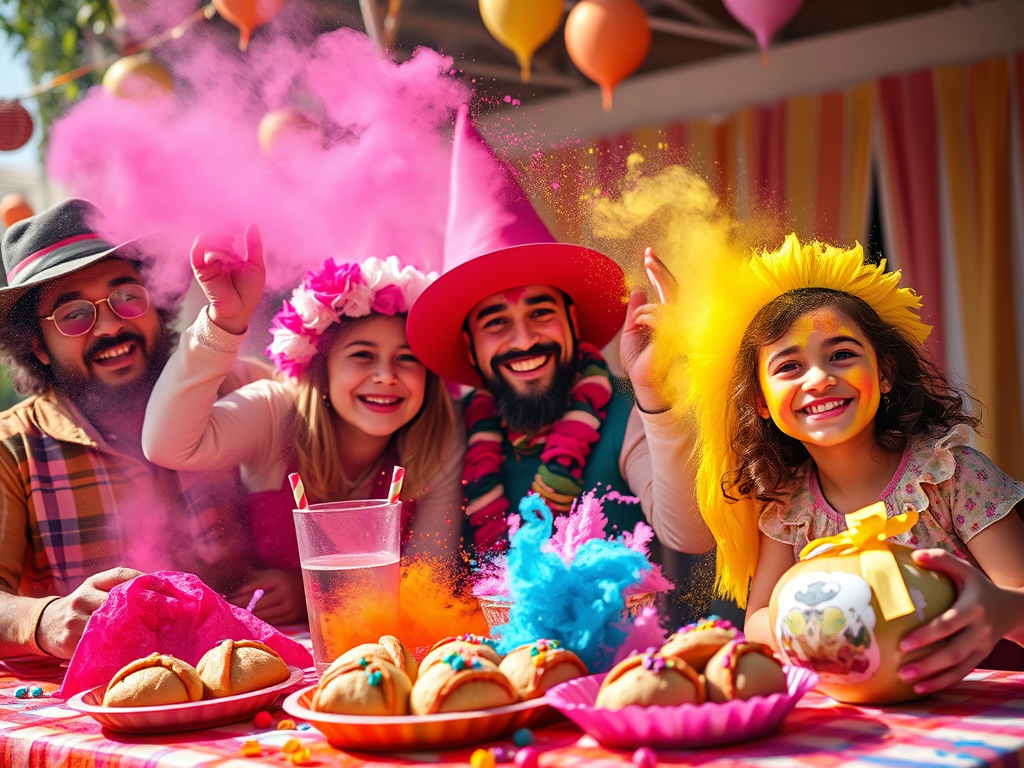
This year, something truly special is happening: Purim and Holi, two vibrant and joyous holidays from different cultures, are falling on the same day. As a HinJew family (that’s Jewish and Hindu, for those not in the know), we’re excited to dive into this festive fusion and experiment with blending the colorful celebrations of Purim’s playful revelry and Holi’s spirited color-throwing tradition. We’re embracing the beauty of both holidays and combining them in a way that celebrates our diverse heritage, all while making unforgettable memories. Join us as we explore how a multi-cultural family can turn this rare overlap into an extra special celebration!
Understanding Purim
Purim is a joyful Jewish holiday that celebrates the salvation of the Jewish people in ancient Persia, as told in the Book of Esther. The story centers around Queen Esther, who courageously intervened to stop the evil plot of Haman, a royal advisor, to annihilate the Jews. Purim is marked by festive celebrations, including reading the Megillah (the Scroll of Esther), wearing costumes, and giving gifts of food to friends and charity to the needy. One of the most iconic Purim traditions is the feasting, which often includes enjoying sweet treats like hamantaschen, triangular pastries filled with fruit or poppy seeds. It’s a time of joy and community, where the usual solemnity of Jewish holidays is replaced by exuberance and fun. Purim also encourages people to reflect on themes of courage, identity, and the unexpected ways in which salvation can arrive.
Understanding Holi
Holi is a vibrant Hindu festival that marks the arrival of spring and celebrates the triumph of good over evil. Known as the Festival of Colors, it is celebrated with joyous, spirited festivities, where people throw colored powders at each other in the streets, dance, sing, and enjoy festive foods. The holiday is rooted in the mythological story of Holika, who was defeated by the god Vishnu, symbolizing the victory of righteousness. Holi also celebrates the playful love of the gods Krishna and Radha, with people often engaging in playful pranks and gatherings. The festival is a time for forgiveness, renewal, and the breaking down of social barriers, as people of all backgrounds come together to celebrate. Music, dance, and the joy of being surrounded by a rainbow of colors make Holi a truly unforgettable celebration.
What the combo looks like
For a HinJew family, combining Purim and Holi is all about having fun and celebrating the best of both traditions. We’ll kick off the day with the Megillah reading, complete with costumes—though we might mix it up a bit by adding some Holi-inspired color to our outfits. After that, we’ll dive into the Holi fun with lots of colored powder flying everywhere, but we’ll also make sure to enjoy our traditional Purim treats like hamantaschen. The food will be a mashup too, with both Indian dishes and classic Jewish favorites on the table. We’ll spend the day enjoying the vibrant energy of both holidays, mixing the lively beats of Purim and Holi together. For our family, it’s a chance to celebrate our unique heritage while focusing on themes of joy, unity, and good triumphing over evil—no matter what color you’re wearing!
Ideas for combining holidays in your own multi-cultural family
Get creative with fusion foods: A great way to honor both cultures is through food. Experiment with blending traditional dishes from each holiday to create new, exciting meals. If you’re combining Diwali and Thanksgiving, try serving a fusion feast with both samosas and pumpkin pie, or serve curry alongside mashed potatoes. The kitchen is the perfect place to celebrate your family’s diversity!
Create fusion traditions: Blend the unique customs of both holidays into something new. For Passover and Easter, you could create a special dinner that includes both traditional Passover foods like matzah and charoset, alongside Easter dishes like hot cross buns. You could also have an Easter egg hunt with a twist, where each egg contains a small item or symbol related to the Passover story, like a mini matzah or a tiny figurine of the Four Questions. This creative fusion lets you honor the spirit of both holidays while starting something new for your family.
Share the celebrations with others: Multi-cultural families often have a wide circle of friends and relatives who come from different backgrounds. Use the overlapping holidays as a chance to invite everyone to join in and experience the fusion. For Purim and Holi, you could host a combined celebration where guests can learn about the meaning behind each holiday and participate in activities like coloring T-shirts, dancing, and sharing festive meals from both cultures. This is a great way to share your family’s traditions and celebrate diversity.
At the end of the day, whether we’re donning colorful costumes for Purim, throwing powders in the air for Holi, or mixing both into one epic celebration, we’re reminded that holidays are all about joy, togetherness, and making memories. Who says you can’t have your hamantaschen and your samosas, wear a costume and throw colors? In our multi-cultural family, we’ve learned that the more traditions you bring to the table, the bigger the party—so here’s to celebrating the best of both worlds, one vibrant festival at a time!
My hope is that this blog may be helpful, or dare I say inspirational to someone out there. Share your family’s festive fusions!
 diverse AF
Leave a comment