
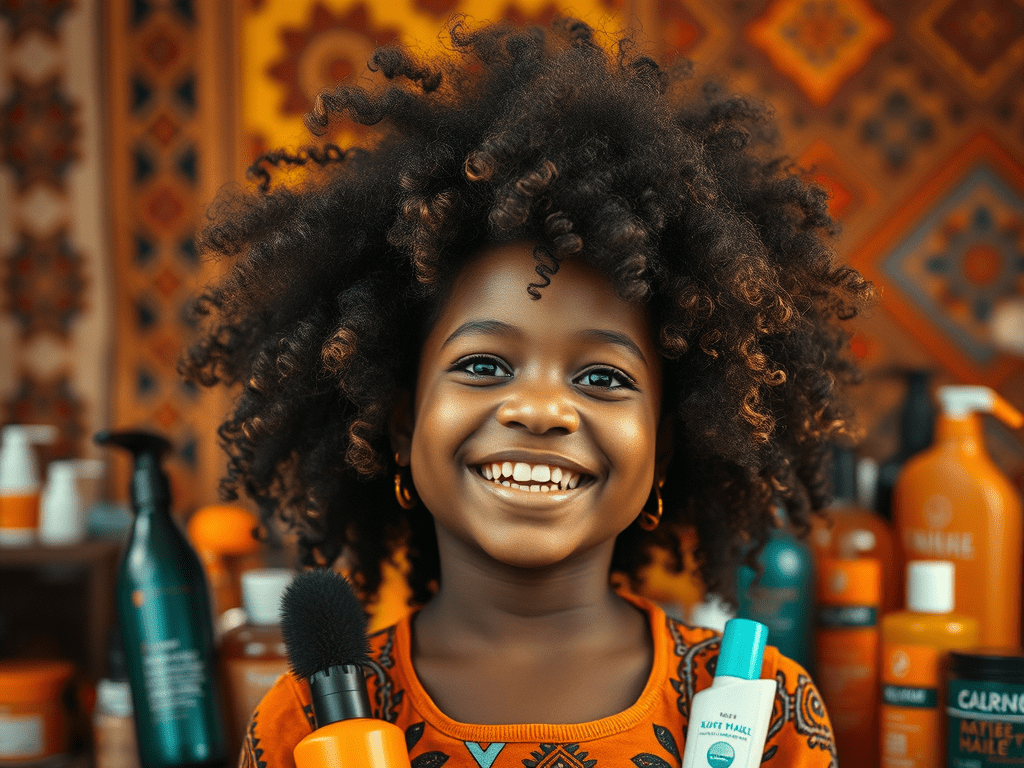
As a white mother to a two-year-old Black foster daughter, I was genuinely surprised by how much I’ve had to learn about the cultural significance of Black hair. What I initially thought was just a matter of styling and maintenance has turned into a deeper exploration of history, identity, and pride. Though my daughter is still too young to understand these concepts, I know that as she grows, her hair will become a powerful reflection of who she is and where she comes from. I want to learn as much as I can now so I can support her in embracing her natural hair and the cultural richness it represents. Here’s what I’ve discovered so far about Black hair’s meaning, why it’s so much more than just a hairstyle, and how I plan to help my daughter appreciate her heritage as she grows up.
Understanding Black hair: the historical, political, and social dimensions
Black hair carries a rich cultural history that’s deeply intertwined with identity, ancestry, and pride. For centuries, it has been a defining feature of Black communities worldwide, representing more than just physical appearance—it reflects a complex history of resilience, resistance, and empowerment. In many African cultures, hair was a symbol of status, spirituality, and tradition, while for Black people in the U.S., it became a form of resistance to colonial beauty standards imposed during slavery. Throughout history, Black hair has served as an act of defiance, from the rise of the Afro during the civil rights movement to today’s natural hair revolution, where reclaiming natural textures becomes a form of rejecting Eurocentric ideals of beauty. Yet, despite its significance, Black hair has been politicized, its style often scrutinized and even penalized in workplaces, schools, and public spaces. This politicization reflects broader societal pressures to conform to mainstream standards of beauty, which have long been exclusionary and racist. Today, the struggle for Black hair to be embraced in all its forms is not just about aesthetics; it’s a powerful confrontation against systemic racism, pushing back on beauty standards that have historically marginalized Black people and their culture.
Navigating Black hair care as a white parent
The basics of caring for Black hair involve understanding the importance of moisture, using the right tools, and learning the techniques that work best for different textures. Key tools like wide-tooth combs, detangling brushes, and satin or silk scarves are essential, while nourishing products like oils, creams, and leave-in conditioners help maintain hair health and promote growth. I’ve also learned to be mindful of the specific needs of Black hair, such as protecting it at night to prevent breakage and maintaining its natural texture. Admittedly, I’m completely out of my element when it comes to braiding my daughter’s hair, so knowing my limitations and calling in the experts was honestly my best bet to make sure she doesn’t miss out on anything just because she has a white mom. Sometimes, a little help from the pros is exactly what we both need! The pro, in this case, is a Black mom friend that braids my daughter’s hair every few weeks. She not only teaches me valuable tips, but also shows me how to teach my daughter to be tough, even when getting her hair done hurts a little bit. Sometimes beauty and self-care come with a little bit of patience and resilience.
Dealing with discrimination and microaggressions
I also want to understand how to deal with microaggressions related to Black hair so I can eventually equip my daughter to handle these challenges as she grows up in our predominantly white neighborhood. One of the first steps will be to prepare her for potential comments or questions about her hair, whether it’s someone touching her hair without permission or asking “Why is your hair so big?” This discrimination, though often subtle, can be hurtful, and it’s important for her to understand that her hair is beautiful, not “different” or “strange.” I want to teach her that comments like these often come from ignorance, not malice, and that her hair is a proud part of her identity, linked to her history, heritage, and culture. Instilling confidence and pride in her natural hair from a young age is key, so she knows that she doesn’t have to conform to anyone’s standards of beauty. Explaining these complex ideas to her in an age-appropriate way involves simple conversations—like talking about how everyone’s hair is unique, and why her curls are so special. I want her to feel empowered to respond with kindness, but also to know that she can stand up for herself if someone crosses a line. By preparing her with love, support, and the tools to understand the world around her, I hope she will always wear her hair like the crown it is, no matter what anyone says.
I now know that Black hair is so much more than just hair. It’s history, pride, and a whole lot of texture (literally). I want my daughter to grow up knowing that her hair is beautiful AF, no matter how much detangler we need to get through the day. I’m committed to helping her embrace her natural hair with confidence and pride. And even though I may never fully understand everything about Black hair, I’m committed to learning. And really, the most important thing is for me to show up for my daughter. My hope is she’ll wear it proudly and even teach me a thing or two along the way.
My hope is that this blog may be helpful, or dare I say inspirational to someone out there. How are you ensuring your daughters grow up knowing their hair is worthy of celebration?

 diverse AF
Leave a comment